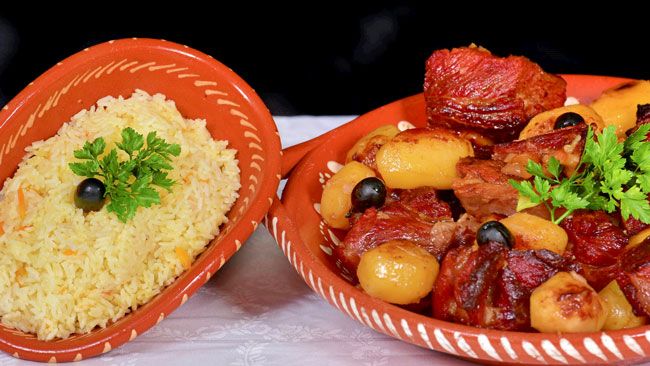
On the banks of the Ave River, in Taíde, Póvoa de Lanhoso, stands the Sanctuary of Our Lady of Porto d’Ave, a place of devotion, Baroque beauty, and a meeting point for pilgrims from all over the country since 1730. Amidst faith, music, and the Joanine tiles, a gastronomic tradition was born that spans centuries: the Bife à Romaria (Pilgrimage Steak).
Inspired by the abundance of pastures and the creativity of local cooks, this dish has become a great symbol of celebrations and gatherings. A generous steak, large enough to spill onto the plate, covered with a rich and flavorful onion sauce, which wins over with its simplicity and authenticity.
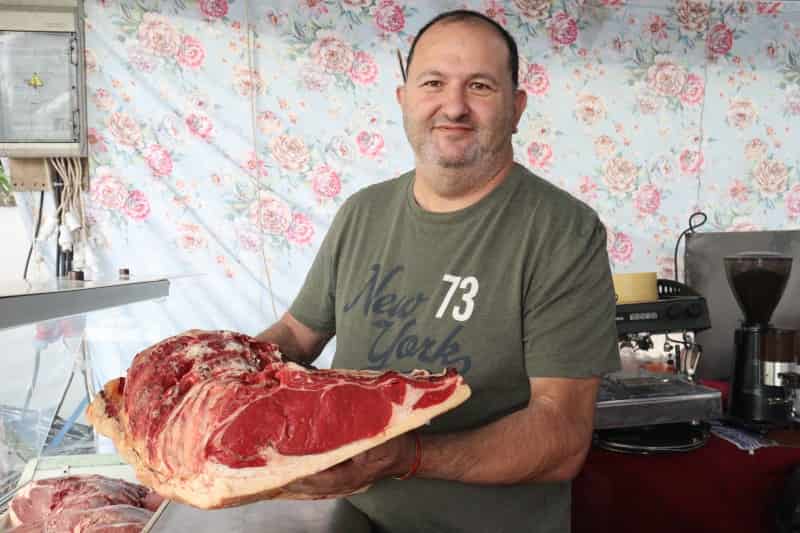
Served with fried or boiled potatoes, fresh tomato salad, and, to finish, the unmistakable melon in oak bark, Bife à Romaria is more than just a meal: it’s an experience that combines tradition, flavor, and celebration.
And, as tradition dictates, nothing is better than pairing this dish with a Vinho Verde red wine from the region, which further enhances the intensity of the flavors.
Browse e-Póvoa and discover why this dish remains one of the most original and irresistible in Portuguese cuisine and an unmissable experience in the first days of September.
Ingredients
Beef steak (oxtail) (500g)
2 onions
Olive oil
Salt
Black pepper
2 cloves of garlic
Wine vinegar
Side Dishes
Potatoes (fried or boiled)
Tomato salad
Dessert:
Melon (Oak Bark)
Preparation Method
A simple fried steak with onions is a rich gastronomic experience with centuries of tradition.
Season the meat or sirloin steaks. Just a pinch of coarse salt, garlic, and ground black pepper to taste. After absorbing the flavors, fry the steak in oil. Once fried, use the same pan to prepare the onions. If you prefer, use a new pan, reserving the frying sauce.
Cut the onions into rings and add them to the steak frying sauce. Add salt to taste, pepper, and chopped garlic. Finally, add a little vinegar and simmer over medium heat until the onions are cooked to your liking.
To serve, top the steaks with the onion mixture and pair with a good local Vinho Verde.
For dessert, tradition dictates serving melon (oak bark).